Flea and tick control requires targeting the specific transitional habitats where domestic parasites thrive. In Jefferson County, warm humidity from April through October accelerates the egg-to-adult emergence cycle of…
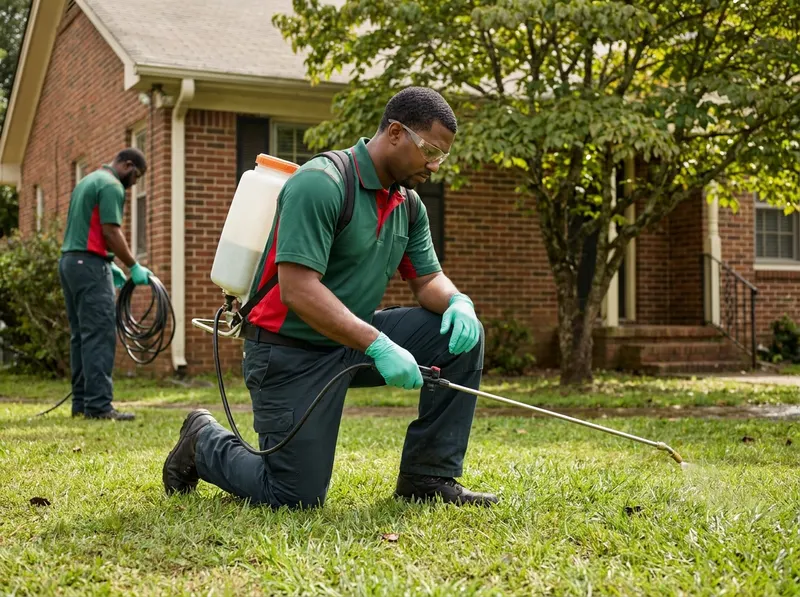
Flea and tick control requires targeting the specific transitional habitats where domestic parasites thrive. In Jefferson County, warm humidity from April through October accelerates the egg-to-adult emergence cycle of cat fleas down to just 14 days, while lone star and brown dog ticks climb tall fescue blades to seek mammal hosts. The treatment process focuses on micro-habitats rather than indiscriminate broadcast dumping: low shrub bases, organic pine-needle beds, crawling spaces beneath outdoor decking, and the damp soil under tree canopies. Shaded historic properties in Highland Park, Forest Park, and Glen Iris often present high leaf-litter accumulation that shields flea pupae from sunlight, whereas open, graded turf in Crestwood North and Crestline Park demands precise perimeter boundaries along fenced property lines.
A common misunderstanding is equating an interior pet bath or off-the-shelf carpet powder with biological control. Adult fleas visible on a dog represent roughly 5% of the total population on the parcel; the remaining 95% exist in the outdoor soil as eggs, larvae, and pupal cocoons. While an oral pet medication kills adult parasites feeding directly on an animal, it leaves untreated yard soil producing thousands of newly emerged adults weekly. A targeted outdoor application combines a low-toxicity adulticide with an insect growth regulator (IGR). The IGR mimics juvenile hormones, preventing flea larvae from pupating into biting adults and stopping female ticks from laying viable egg clutches. Homeowners near moist drainage corridors, such as zones adjacent to Valley Creek or shaded runs near Red Mountain Park and Ruffner Mountain Nature Preserve, experience persistent wildlife vectors including raccoons, opossums, and stray animals that reintroduce ticks continuously into yard perimeters.
Selecting a single targeted outdoor barrier application over broad chemical drenching balances safety and efficacy. Heavy synthetic sprays can wash through sandy-clay loam into urban watershed drains near Sloss Furnaces National Historic Landmark or Railroad Park during heavy summer storms. The trade-off is focused application frequency: botanical-first pyrethrin barriers and micro-encapsulated compounds break down under heavy rain over 45 to 60 days, requiring a seasonal reapplication during peak summer temperatures rather than a single permanent fix. Step one involves clearing pet bowls and children's toys from grass surfaces. Step two identifies high-risk transition zones around fencing, garden borders, and outbuildings in Roebuck Springs, Five Points South, and Smithfield. Step three delivers calibrated, low-pressure liquid spray to organic drop zones, creating an active barrier that stays bonded to ground-level vegetative cover once dried.
Every job gets a firm, written price after a free on-site visit.
Tell us about your flea and tick lawn treatment job in Birmingham and we'll send a clear, written quote, usually the same day.
 Brevora Pest Solutions