Stinging insect removal stabilizes residential properties when paper wasps (*Polistes*), aerial hornets (*Dolichovespula maculata*), or subterranean yellowjackets (*Vespula squamosa*) compromise living perimeters. In…
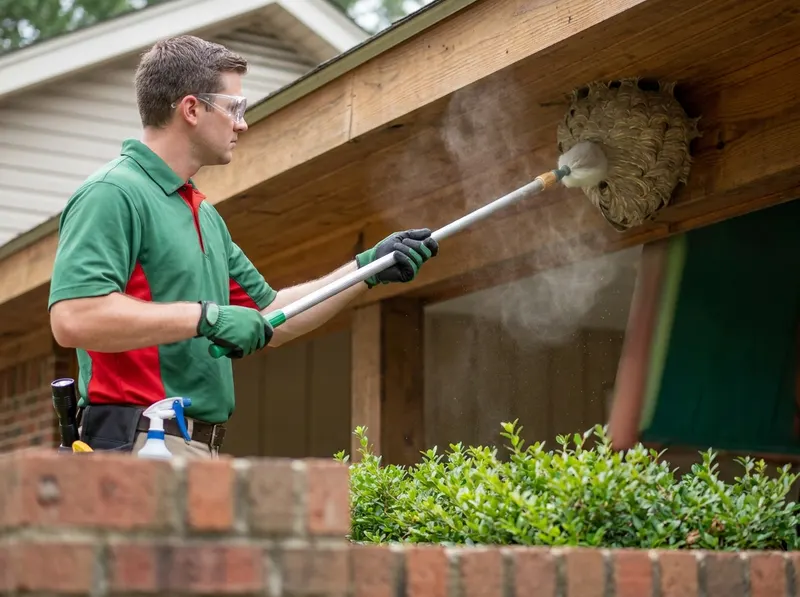
Stinging insect removal stabilizes residential properties when paper wasps (*Polistes*), aerial hornets (*Dolichovespula maculata*), or subterranean yellowjackets (*Vespula squamosa*) compromise living perimeters. In older historical communities such as Highland Park, Forest Park, and Five Points South, deep soffit overhangs, multi-story masonry mortar gaps, and decorative roof brackets provide optimal nesting harbors. Suburban yards in Crestwood North, Avondale, and Crestline Park frequently encounter eastern yellowjackets excavating abandoned rodent burrows beneath landscaped turf or root zones near shaded property lines. Untreated colonies expand rapidly during the high-humidity Jefferson County summer, reaching populations between 1,000 and 4,000 workers by late August, which heightens the probability of structural compromise and accidental stings.
Immediate mechanical extraction paired with direct void treatments prevents indoor penetration. Stinging insects situated inside wall voids or chimney flues in Glen Iris or Roebuck Springs should never be sealed with caulk while active; sealing an active opening forces foraging workers through drywall penetrations, light fixtures, and electrical switchplates directly into occupied living rooms or kitchens. Proper structural removal applies pressurized micro-dust formulations directly into the primary flight pathway, neutralizes the reproductive queen within 24 hours, and seals the perimeter void with galvanized wire mesh or silicone sealant after all interior insect movement ceases.
Homeowners selecting single-incident eradication avoid the common trap of aggressive multi-year maintenance agreements that standard corporate exterminators mandate. A standalone nest extraction fits discrete structural threats, such as an active bald-faced hornet football nest hanging 18 feet up an exterior eave, without locking property owners into recurring quarterly billing. The deliberate trade-off involves future seasonal monitoring: while targeted eradication thoroughly neutralizes the resident queen and destroys the current brood chamber, it leaves untreated yard perimeters open to new seasonal queens establishing colonies the subsequent spring, which requires exterior visual inspections each April.
Every job gets a firm, written price after a free on-site visit.
Tell us about your stinging insect removal job in Birmingham and we'll send a clear, written quote, usually the same day.
 Brevora Pest Solutions